Building strength
and security: Tailored self-defense programs

What Mirella offers
Mirella offers a range of services to meet the needs of every client. Have something else in mind? We'd be happy to work with you to create a custom quote.
-
The youth program designed for underprivileged groups runs for a duration of two months. It supports female and male youth aged 12 to 22 who are experiencing many challenges and helps them overcome societal stereotypes and stigmas.
The project was implemented in Lebanon, specifically in the Palestinian refugee camps in Beirut, and in the North (Minieh), where it was offered only for girls. The program focuses on helping participants understand their bodies, learn how movement and sports contribute to health, and recognize their rights—especially for young women—to have control over their bodies and explore their options. It also encourages them to discover opportunities in education and life, understand their ambitions, and envision their future. The program promotes positivity and helps youth view life from a different perspective. It was also implemented in Afel schools in Beirut with mixed-gender groups.
-
Female journalists face a distinct set of risks that overlap with general field dangers but also include gender‑specific threats. Drawing on global research from CPJ (Committee to Protect Journalists), RSF (Reporters Without Borders), IWMF (International Women’s Media Foundation), and firsthand accounts from women in the field, this workshop series addresses the challenges they encounter, including:
1. Harassment and intimidation (street harassment, online harassment, pressure from authorities)
2. Physical risks in crowds and protests
3. Sexual violence and gender‑based attacks
4. Kidnapping and abduction
5. Travel and mobility risks (public transportation, taxis, rideshares, unsafe accommodations)
6. Encounters with authorities and checkpoints
7. Psychological stress and secondary trauma
8. Workplace‑related risks
The workshops will provide practical tools and strategies, including:
• Situational awareness and early risk detection
• Verbal de‑escalation techniques
• Boundary‑setting and assertive communication
• Physical self‑defense adapted for field gear (cameras, bags, press vests)
• Escape and disengagement tactics in crowds or confined spaces
• Digital and online self‑defense (managing harassment, doxing, stalking)
• Emotional resilience and trauma‑management skills
-
Women’s and marginalized people’s safety is critical for accessing public spaces and is a fundamental right. This workshop focuses on fostering a relational approach between women’s bodies and public space. By nurturing a woman’s understanding of her body’s instinctive responses to danger and her relationship with the spaces she navigates, she may be better equipped to maintain her safety in public environments.
This workshop is designed to provide practical tools and emphasizes awareness, risk assessment, and understanding the body’s natural responses to danger. Women and marginalized communities will gain valuable knowledge about:
• Strategies to maintain personal safety
• Building confidence and assertiveness
• Identifying potential risks
• Recognizing their body’s instinctive reactions to threats
• Protecting themselves and setting boundaries
• Handling difficult situations with strength and composure
Participants will also cultivate skills in assessing and mitigating risks while learning to trust their instincts in uncomfortable or potentially threatening situations.
Through a combination of theoretical discussions, practical exercises, and group reflections, participants will be encouraged to explore their relationship with public space and develop a heightened sense of body awareness.
As a result, participants are expected to experience increased confidence, preparedness, and a stronger ability to trust their instincts, ultimately contributing to an enhanced sense of safety in public spaces.
Importantly, the intention is not to shift the responsibility of ensuring safety onto women themselves. Safety in public spaces remains a fundamental right that must be guaranteed by the state and society. The outcomes of this project will also contribute to the ongoing discourse on women’s safety and inform the development of more comprehensive and effective interventions.
-
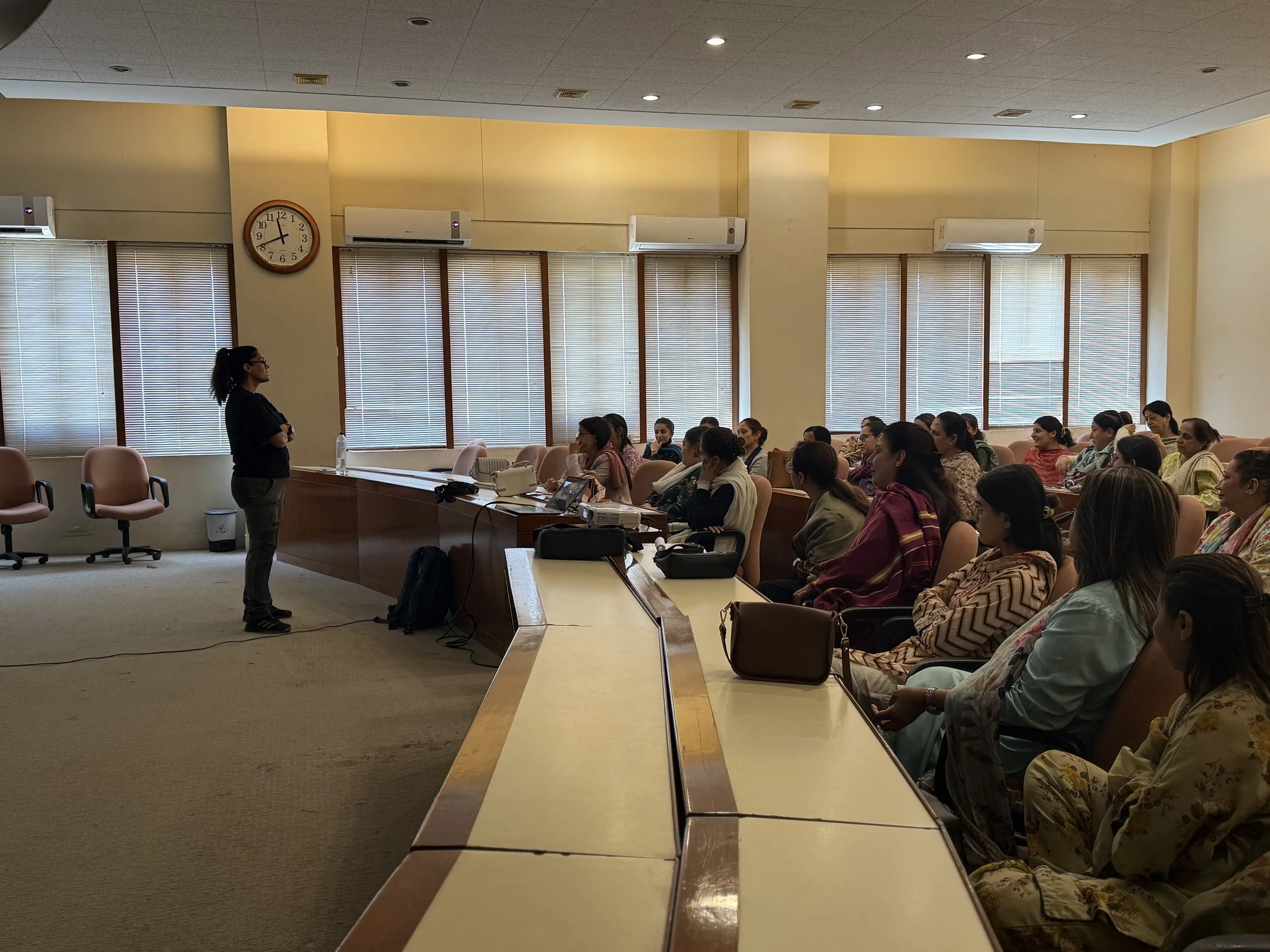
A Women’s Security Workshop equips women with practical skills to recognize risk, set boundaries, and respond effectively to potential threats in public or private spaces. The workshop focuses on awareness, decision-making under stress, and understanding the body’s instinctive responses to danger. Through discussion and practical exercises, participants develop confidence, improve personal safety strategies, and strengthen their ability to navigate everyday environments more securely.
-
A Situational Awareness Workshop teaches participants how to observe, interpret, and respond to their environment in order to reduce risk and improve decision-making. The workshop develops the ability to detect anomalies, recognize early warning signals, and maintain awareness in everyday situations such as travel, public spaces, and social environments. Participants learn practical strategies for attention management, risk assessment, and proactive safety behavior.
-
Residential Security Workshop helps individuals and families understand how to make their homes safer and reduce everyday security risks. The workshop focuses on identifying vulnerabilities around the home, developing simple prevention strategies, and building habits that improve safety. Participants learn practical measures such as assessing entry points, improving lighting and visibility, creating emergency plans, and strengthening awareness of their surroundings and neighbors. The goal is to empower residents with knowledge and practical tools that help them feel more confident and prepared to protect their homes and loved ones.
-
Security guard training is essential for any organization because guards are often the first line of defense and the first point of contact during emergencies. Proper training ensures that security personnel can identify risks early, respond appropriately to incidents, manage conflict professionally, and follow clear procedures under pressure. Well-trained guards help prevent theft, vandalism, workplace violence, and unauthorized access, while also improving emergency preparedness and crisis response.
Beyond protection,trained security staff contribute to a safer work environment, stronger risk management, and increased confidence among employees, clients, and visitors. Investing in professional security training not only reduces liability and operational disruption but also strengthens the overall safety culture of the organization.
What the Training Includes:
• Roles and Responsibilities of Security Guards – Understanding duties, professional conduct, and ethical standards.
• Situational Awareness – Learning how to observe surroundings, identify suspicious behavior, and detect potential risks early.
• Access Control Procedures – Managing entry points, verifying identities, and preventing unauthorized access.
• Patrolling Techniques – Effective methods for monitoring facilities, detecting irregularities, and reporting concerns.
• Conflict Management & De-escalation – Handling difficult situations calmly and professionally while reducing the risk of escalation.
• Emergency Response Procedures – Responding to incidents such as fire, medical emergencies, evacuations, and security breaches.
• Incident Reporting & Documentation – Writing clear reports and following proper communication protocols.
• Basic Personal Safety & Defensive Awareness – Understanding personal safety principles and maintaining control in high-risk situations.
• Communication Skills – Effective interaction with staff, visitors, and management.
• Professional Conduct & Customer Interaction – Maintaining professionalism while representing the organization.
This training helps ensure that security personnel are prepared, confident, and capable of protecting people, property, and organizational operations.